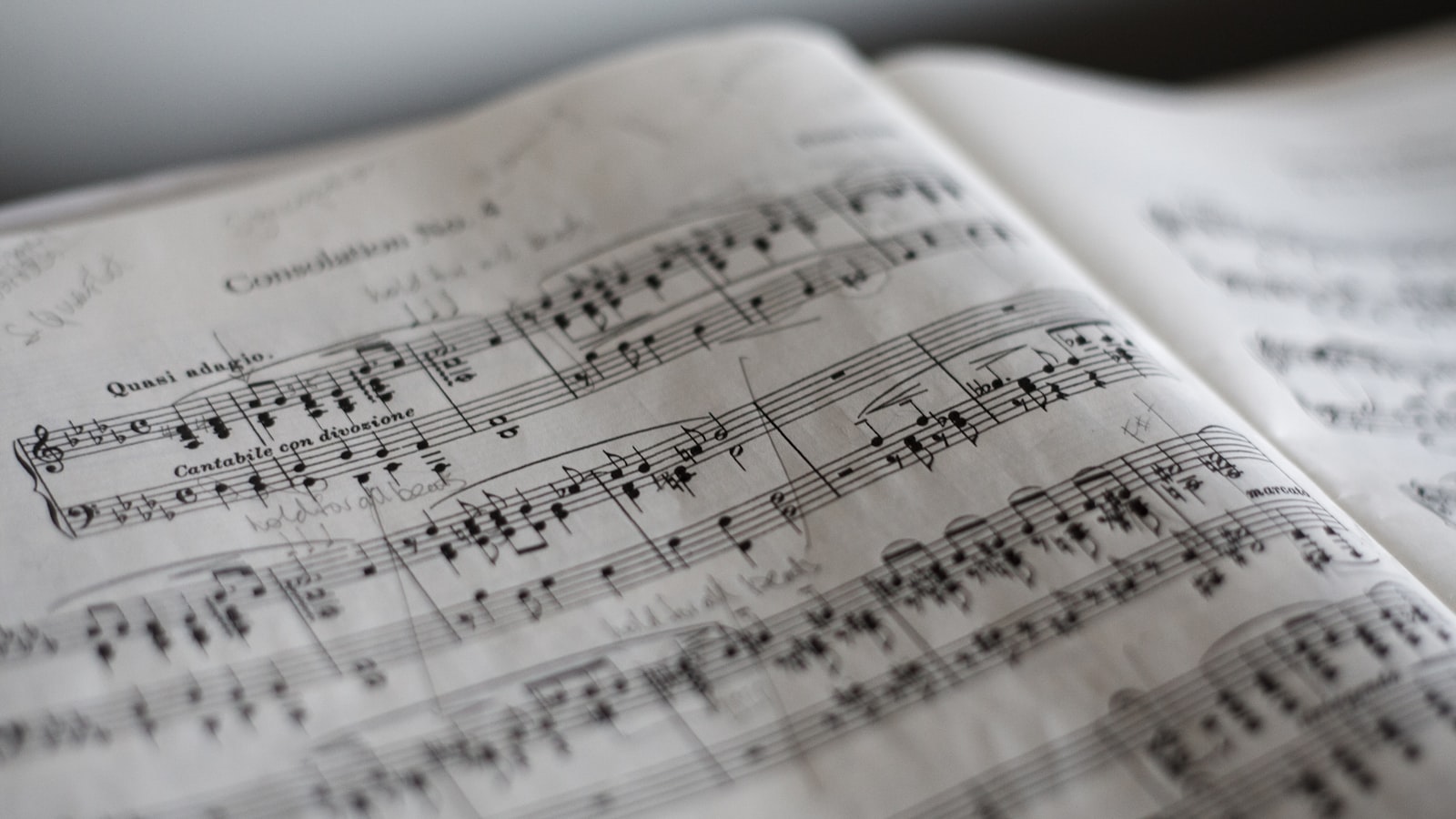
Sheet music looks intimidating from the outside — a fence of five lines crowded with dots, tails, and symbols that seem to belong to some private club. Plenty of people decide early on that reading music is beyond them and rely on tabs, chord charts, or ear alone. That's a fine way to start, but learning to read the standard notation opens up centuries of music written for every instrument, and it's far less mysterious than it appears.
Here's the reassuring truth: sheet music is just a code, and it's a logical one. Once you understand what each part is telling you, the page stops being a wall of symbols and becomes a set of clear instructions. This guide starts at absolute zero and builds up piece by piece, so by the end you'll be able to look at a line of music and begin to decode it.
The staff and what it tells you#
Everything sits on the staff — the set of five horizontal lines with four spaces between them. The staff is a kind of grid for pitch. The higher up the staff a note sits, the higher it sounds; the lower down, the lower it sounds. That's the first and most important idea: vertical position means pitch. Up is higher, down is lower.
Notes live either on a line (with the line passing through the middle of the note) or in a space (sitting between two lines). Each line and each space represents a specific pitch, and they step through the musical alphabet — A, B, C, D, E, F, G, then back to A — as you move up. Move up one line-or-space and you move up one letter; keep going past G and you loop back to A. So the whole system is just this alphabet climbing and descending across the grid.
When notes go higher or lower than the five lines can show, we add tiny extra lines called ledger lines above or below the staff, extending the grid as needed. Don't worry about those yet — the point for now is that a note's height on the staff is the first half of what it's telling you.
Clefs: the key to which note is which#
Here's the catch. The lines and spaces only stand for specific pitches once you know which pitch the staff is anchored to — and that's the job of the clef, the curly symbol at the very start of every line. The clef is the reference point that says, in effect, "this particular line is this particular note," and everything else follows from there.
You'll mostly meet two clefs as a beginner:
- The treble clef (it curls around the second line from the bottom), used for higher-pitched instruments and the right hand on piano
- The bass clef (two dots hugging the second line from the top), used for lower pitches and the left hand on piano
A treble clef and a bass clef put the same-looking note in completely different places, which is why the clef always comes first. Learn where a couple of anchor notes sit in each clef and you can count up or down from them to work out any other note. Many beginners lean on little memory phrases for the lines and spaces, and there's no shame in that — they're training wheels that quietly fall away once the positions become familiar.
Don't try to memorize every note position at once. Learn a few anchor notes cold, then count from them. Speed comes later; accuracy comes first.
Reading rhythm: how long each note lasts#
Pitch is only half the story. The other half is rhythm — how long you hold each note — and this is where the shape of the note itself matters. A note's appearance tells you its duration relative to the others.
The basics build by halving. A whole note (a hollow oval) lasts the longest. A half note (hollow, with a stem) lasts half as long. A quarter note (a filled-in oval with a stem) is half of that again, and eighth and sixteenth notes, with their little flags or beams, keep dividing from there. So the picture of the note is quietly telling you its length. Rests — symbols for silence — work the same way, with each rest matching the length of its equivalent note.
The whole thing is organized by the time signature, the pair of numbers stacked at the start, just after the clef. The top number tells you how many beats are in each measure; the bottom tells you which kind of note counts as one beat. Vertical bar lines chop the staff into those measures, so the music arrives in tidy, countable chunks. Reading rhythm well takes practice, and counting out loud as you go is the single best habit to build early — it forces the timing to be real rather than approximate.
Putting pitch and rhythm together#
Now the two halves combine. Every note on the page is telling you two things at once: which note (from its height on the staff, read through the clef) and how long (from its shape). Reading music is simply the act of taking in both at the same time — a skill that feels clumsy at first and smooth surprisingly soon.
Start slow and small. Take a few bars of an easy piece and work through it note by note, with no pressure to play in real time. Name each note out loud, work out its length, then play it. Yes, it's slow and a bit laborious at the beginning. That's normal and temporary. What you're building is pattern recognition, and like reading words, it speeds up as the shapes become familiar — you stop spelling out each note and start seeing groups at a glance.
A few habits make this stage go faster:
- Practice with music that's easier than what you can play by ear, so reading is the only challenge
- Keep a steady, slow pulse rather than rushing the easy bars and stalling on the hard ones
- Read a little every day; ten minutes daily beats a long session once a week
- Say note names and count beats aloud until it feels automatic
Once the mechanics start to click, it helps to know a bit about why the notes group the way they do. Understanding the basics of music theory — scales, keys, and how pieces are built — makes the page feel less like isolated dots and more like language with grammar behind it.
From decoding to fluency#
Learning to read is the difference between spelling out one note at a time and eventually taking in a phrase the way you take in a sentence. The early stage, where you count slowly and name every note, is real reading — it's just reading at a beginner's pace, and everyone starts there. The dots aren't a secret code kept from you; they're a plain system you're now learning to speak.
Give it steady, patient time and the wall of symbols quietly turns into music you can follow. From here, the natural next step is to build actual speed and confidence, which is its own skill worth training your sight-reading directly. But that comes after the foundations you've just laid. For now, take a simple piece, go slowly, name the notes, count the beats — and enjoy the small thrill of a page that used to look like nonsense starting to make sense.